The Call from Yourself: Understanding Caller ID Spoofing
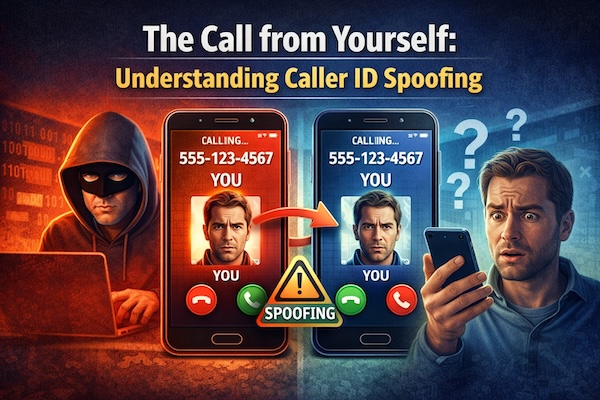
Receiving a call from your own phone number is a uniquely unsettling experience that signals a sophisticated digital fraud. This tactic, known as caller ID spoofing, is a primary tool for illegal robocallers and is reaching epidemic proportions. According to data from the robocall blocking service Nomorobo, a staggering 74% of all robocalls detected in the first nine months of 2025 used fake local area codes — a nearly 50% increase from the previous year. This practice erodes the fundamental trust we place in our most basic communication tools. The goal of this manipulation is simple yet effective: to exploit human curiosity and trust, dramatically increasing the likelihood that a potential victim will answer the call.
The Technology Behind the Trick
To understand how your own number can call you, one must first demystify how caller ID works. The number displayed on your screen is not verified in real-time by the phone network. Instead, it is a piece of data — the “Caller ID header” — sent along with the call by the originating service provider. In the era of Voice over Internet Protocol (VoIP) technology, this system has become highly vulnerable. Scammers can use cheap, easily accessible software or online services to set this header to any number they wish before routing the call through the complex web of interconnected carriers. This means they can choose to display a number with your local area code, a trusted business, or, in the most disorienting cases, your own digits.
The Scammer’s Strategic Playbook
Spoofing your own number may seem bizarre, but it is a calculated psychological attack with clear advantages for the fraudster. The primary goal is to achieve a high answer rate, and seeing one’s own number creates a powerful shock factor that overrides normal skepticism. Furthermore, it renders common defense tactics futile; blocking the number means blocking yourself, and victims who try to call back or report the number often only reach another innocent person or themselves. This creates a smokescreen of confusion that effectively protects the scammer’s infrastructure. Common scams delivered via this method include the “one-ring” scam designed to trick you into calling back a premium-rate number, and imposter scams where criminals pose as government agencies or banks, using the spoofed local number to add a false veneer of legitimacy.
Neighbor Spoofing: The Trusted Local Attack
Self-spoofing is an extreme form of a broader, highly prevalent tactic called “neighbor spoofing.” In this approach, scammers manipulate the caller ID to show a number that shares your area code and often the same prefix, making it appear as if the call is coming from a nearby business or neighbor. This exploitation of local familiarity is ruthlessly effective. Telecom fraud analysts note that spoofing a local number is akin to putting on a familiar uniform, a social engineering trick that preys on our inherent trust in community.
The Legal and Enforcement Landscape
Combatting this issue is a significant challenge for regulators. In the United States, the Truth in Caller ID Act of 2009 makes it illegal to transmit misleading caller ID information with the intent to defraud or cause harm, with penalties of up to $50,120 per call for violations related to the National Do Not Call Registry. However, enforcement is difficult as scammers often operate from outside U.S. jurisdiction, use disposable VoIP numbers, and employ tactics like using millions of “mothballed” phone numbers to constantly change their apparent origin. The Federal Communications Commission (FCC) and Federal Trade Commission (FTC) are the primary agencies involved, relying heavily on consumer complaints to identify patterns and pursue large-scale enforcement actions.
Your Action Plan for Defense and Response
While the problem is systemic, you are not powerless. A multi-layered defense strategy is essential. The most critical rule is to not answer calls from unknown or suspicious numbers, including your own. Answering confirms to automated systems that your number is active and can lead to more scam calls. If you do answer accidentally, do not press any keys and hang up immediately. If your number is being spoofed and you start receiving angry callbacks from others, calmly explain that your number is being fraudulently used by scammers. You can temporarily change your voicemail greeting to a brief message stating this fact and directing callers to report the scam to the FTC.
Proactively, you should activate free call-blocking tools offered by your carrier and consider reputable third-party call-filtering apps. Furthermore, registering your number with the National Do Not Call Registry at DoNotCall.gov is a recommended step. While it will not stop illegal scammers, it will reduce calls from legitimate telemarketers, making the fraudulent ones easier to spot. For any unwanted call, whether you answer or not, you should file a report with the FTC at ReportFraud.ftc.gov. The FTC aggregates this data to track down illegal operations, and the phone numbers reported are shared daily with industry partners to improve call-blocking solutions.
The Technological Future: STIR/SHAKEN and Its Evolution
The long-term solution lies in overhauling the caller ID system itself. The FCC has mandated the implementation of STIR/SHAKEN (Secure Telephone Identity Revisited / Signature-based Handling of Asserted information using toKENs), a framework that acts as a digital signature for calls. When a call is placed, the originating carrier can cryptographically sign it to attest to its legitimacy. The receiving carrier can then verify this signature before the call reaches you, potentially displaying a “Caller Verified” indicator on your screen. Major carriers in the U.S. have deployed this technology, and other countries like Canada, France, and Brazil are implementing similar systems.
However, STIR/SHAKEN is not a silver bullet. Its adoption across thousands of service providers is inconsistent, creating a patchwork system where gaps remain. A key limitation is that it authenticates the number, not the caller’s identity. Recognizing this, the FCC has proposed new rules to enhance the framework. These proposals include requiring carriers to transmit a verified caller name alongside the verified number and to implement measures that clearly label calls originating from outside the United States, aiming to provide consumers with far richer and more useful information.
Conclusion
A call from your own number is a profound violation of your digital identity. While the problem is fueled by global criminal enterprises exploiting technological vulnerabilities, a combined approach of public awareness, regulatory action, and new authentication protocols is making headway. By refusing to answer suspicious calls, diligently using blocking tools, and reporting every violation, you protect not only yourself but also contribute to the collective data needed to dismantle these schemes. The journey to restore trust in our phone networks is ongoing, but with informed vigilance and advancing technology, we can reclaim our peace of mind.
Note: The information in this article is for educational purposes. For the most current guidance on call blocking and reporting, please refer to the official websites of the Federal Communications Commission (FCC) and the Federal Trade Commission (FTC).